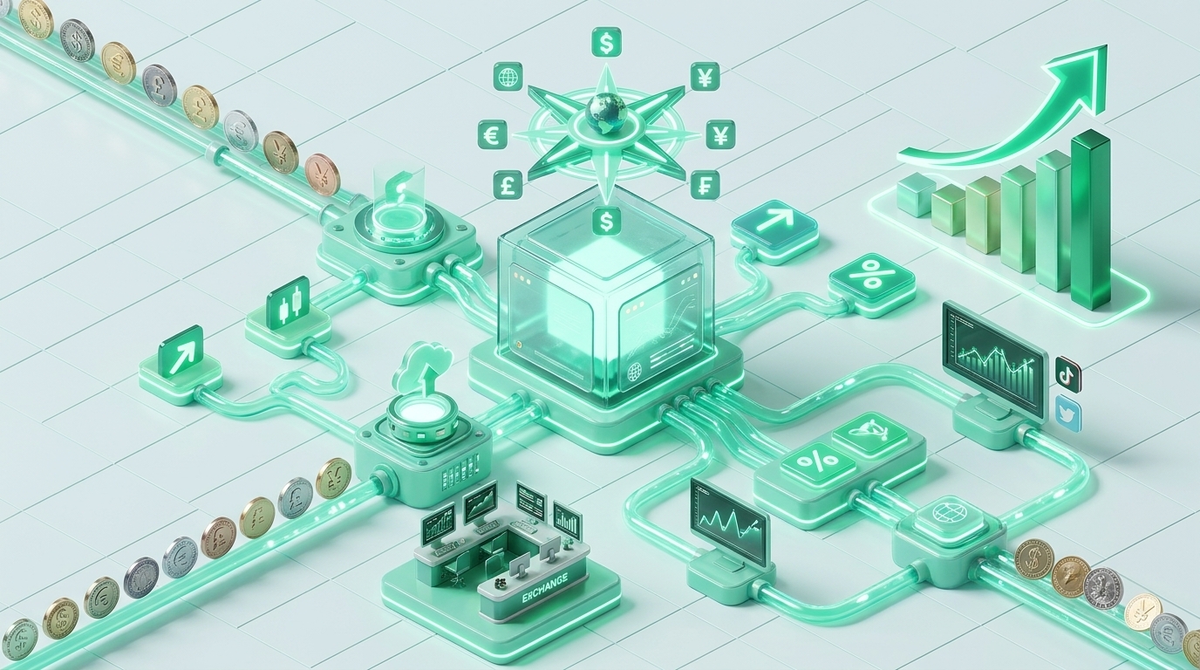
The foreign exchange market, known as Forex or FX, is the largest and most liquid financial market in the world. Imagine a giant, global marketplace where national currencies are bought and sold 24 hours a day, five days a week. This article demystifies Forex in a simple, step-by-step way, providing you a solid foundation for 2026 and beyond. To establish its immense scale, the Bank for International Settlements (BIS) Triennial Central Bank Survey in 2022 reported the market’s daily turnover at over $7.5 trillion, with growth expected to continue into 2026.
What Exactly Is the Forex Market? A 2026 Perspective
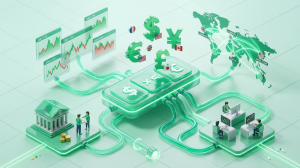
The Forex market is the global marketplace for exchanging one national currency for another at determined prices. It is a decentralized, Over-The-Counter (OTC) market, which means it has no central physical exchange like the New York Stock Exchange. Trading happens electronically between a global network of banks, corporations, and individuals, facilitating international trade and investment.
The primary purpose of the Forex market is to facilitate international trade, tourism, and corporate finance. For example, a U.S. company needing to pay a European supplier must exchange U.S. dollars for euros. The Forex market is defined by several key characteristics that every new trader must understand.
Here are the defining characteristics of the Forex market:
- Global and Decentralized: Trading occurs electronically through a worldwide network of banks and financial institutions across major financial centers like London, New York, Tokyo, and Sydney.
- Extreme Liquidity: The Forex market’s enormous volume means you can typically buy or sell a currency instantly with minimal price impact, a feature known as high liquidity.
- 24/5 Operation: The market follows the sun around the globe, opening in Sydney on Monday morning (local time) and closing in New York on Friday evening, allowing for continuous trading during the workweek.
How Does Forex Trading Work? A Simple Explanation
Forex trading involves the speculative buying and selling of currencies with the goal of profiting from changes in their relative value. At its core, you are always buying one currency while simultaneously selling another. This is why currencies are quoted in pairs, showing how much of one currency is needed to buy another.
A simple analogy for Forex trading is the currency exchange kiosk at an airport. When you travel, you exchange your home currency for the local currency. You are participating in the Forex market on a small scale. In the digital Forex market, this is done speculatively without physically holding the currency. Traders aim to profit from the fluctuations in exchange rates.
When you trade, you are always taking one of two positions. If you believe a currency will increase in value, you “go long” or buy it. If you believe it will decrease in value, you “go short” or sell it. The goal is to close the position at a more favorable price, with the difference representing your profit or loss.
The Core Concept: Trading Currency Pairs
A currency pair is the quotation of two different currencies, with the value of one currency being quoted against the other. The first currency listed in a pair is the Base Currency, and the second currency is the Quote Currency. The exchange rate tells you how much of the quote currency is needed to purchase one unit of the base currency. For instance, if the EUR/USD pair is priced at 1.0850, it means you need 1.0850 US dollars to buy one Euro.
Understanding the structure of a currency pair is fundamental. The base currency is always equal to one unit. The quote currency is what that one unit of the base currency is worth. Both the Bank for International Settlements (BIS) and Reuters provide real-time data on these pairs.
| Currency Pair | Base Currency | Quote Currency | Meaning |
|---|---|---|---|
| EUR/USD | EUR (Euro) | USD (US Dollar) | Value of 1 Euro in US Dollars |
| USD/JPY | USD (US Dollar) | JPY (Japanese Yen) | Value of 1 US Dollar in Japanese Yen |
A Real-World Example: Trading EUR/USD
To understand how a trade works, let’s walk through a simple, hypothetical example. Imagine you believe the Euro (EUR) is going to strengthen against the US Dollar (USD) based on your analysis. The current price of the EUR/USD currency pair is 1.0850.
You decide to “go long” or buy EUR/USD, speculating that its price will rise. Later that day, positive economic news from Europe causes the Euro to strengthen. The EUR/USD price rises to 1.0900. You decide this is a good time to take your profit and close your position. The difference between your entry price (1.0850) and your exit price (1.0900) is your profit. The size of this profit depends on how much currency you initially traded.
The Key Terminology Every Beginner Must Know
To navigate the Forex market, you must understand its specific vocabulary. While some terms may seem technical at first, they represent simple concepts that are essential for reading charts, placing trades, and managing your account. Think of this section as your foundational Forex glossary.
Pips and Pipettes: Measuring Price Movement
A “Pip,” which stands for Percentage in Point, is the smallest standard unit of price change in a currency pair’s exchange rate. For most currency pairs, like the EUR/USD and GBP/USD, a pip is the fourth decimal place (0.0001). This tiny measure is the standard unit for calculating profit or loss. For example, if EUR/USD moves from 1.0850 to 1.0851, that is a one-pip move.
An exception is for pairs involving the Japanese Yen (JPY), where a pip is the second decimal place (0.01). Many brokers now offer even more precise pricing by quoting a fifth (or third for JPY pairs) decimal place. This fractional pip is known as a “Pipette.” In a quote like 1.08505, the final ‘5’ represents 0.5 pips, or 5 pipettes.
Lots: Understanding Trade Size
A “Lot” is the unit of measurement for a transaction size in the Forex market. The lot size you choose directly determines the value of each pip and, consequently, the amount of risk you take on a trade. Understanding position sizing is a core component of risk management.
Here are the three most common lot sizes available to retail traders:
- Standard Lot: 100,000 units of the base currency.
- Mini Lot: 10,000 units of the base currency.
- Micro Lot: 1,000 units of the base currency.
Leverage and Margin: Amplifying Gains and Losses
The concept of using borrowed capital from a broker allows you to open a larger position than your own capital would permit. This trading power amplification is expressed as a ratio, such as 30:1. A 30:1 ratio means that for every $1 of your own money, you can control $30 in the market. This mechanism lets traders with smaller capital amounts participate in the market.
Margin is the amount of your own money required by the broker to open and maintain a position using this amplified buying power. It is not a fee; it is a good faith deposit that is returned to you when the trade is closed. However, using borrowed capital is a double-edged sword. It magnifies both profits and losses equally. This is the single biggest risk for beginners and can lead to rapid account depletion. To protect consumers, regulatory bodies like the European Securities and Markets Authority (ESMA) and the Financial Conduct Authority (FCA) have capped this amplification for retail traders, often at 30:1 for major pairs.
Bid, Ask, and Spread: The Cost of Trading
Every currency pair has two prices quoted at any given time: the bid price and the ask price. The “Bid” price is the price at which your broker is willing to buy the base currency from you; it is the price you get when you sell. The “Ask” price is the price at which your broker will sell the base currency to you; it is the price you pay when you buy.
The “Spread” is the difference between the bid and ask prices. This is the primary way that most Forex brokers earn their income and represents the trader’s cost for executing a transaction. For example, if the EUR/USD is quoted as Bid: 1.0850 and Ask: 1.0851, the spread is 1 pip. A lower or “tighter” spread is more favorable for the trader as it reduces the cost of trading.
Who Are the Main Participants in the Forex Market?
The Forex market is a complex ecosystem with many different types of participants, each trading for different reasons. Understanding this hierarchy provides context for market movements. Retail traders make up a small but growing portion of this massive market. The market is dominated by large institutions that trade billions daily.
From largest to smallest impact, here are the main participants in the Forex market:
- Central Banks: Institutions like the U.S. Federal Reserve (Fed) and the European Central Bank (ECB) have the biggest impact. They manage national currency reserves, control money supply, and set interest rates.
- Major Commercial and Investment Banks: These banks, such as JPMorgan Chase and Deutsche Bank, form the “interbank market” where the bulk of currency trading volume occurs, both for clients and for their own accounts.
- Multinational Corporations: Companies engaged in international trade use the Forex market to buy and sell goods and services in foreign countries and to hedge against currency risk.
- Hedge Funds and Investment Managers: These firms trade currencies for speculative purposes on behalf of their clients, aiming to generate returns from market fluctuations.
- Retail Traders: This category includes individual traders who access the market through a Forex broker. While their individual trades are small, their collective volume is significant.
What Moves the Forex Market? Key Drivers in 2026
Currency values are driven by the perceived economic strength, stability, and monetary policy of their respective countries. A country’s central bank interest rate is a primary driver of its currency’s value. Traders constantly analyze these factors to forecast price movements. These factors can cause significant volatility and create trading opportunities.
The value of a currency fluctuates based on supply and demand, which are influenced by several key economic and political factors. To succeed in Forex, you must know what moves currency prices. How do I know what news is important? Focus on reports related to the drivers below.
These are the primary drivers of the Forex market:
- Central Bank Interest Rates: Higher interest rates often attract foreign investment as they offer a higher return, which can strengthen a currency. Central bank meetings are closely watched events.
- Economic Data Releases: Key economic indicators like Gross Domestic Product (GDP), inflation rates (CPI), and employment numbers, such as the U.S. Non-Farm Payrolls (NFP) report, directly impact currency valuations.
- Political Stability and Geopolitics: National elections, international trade disputes, and geopolitical conflicts create uncertainty and can cause significant currency volatility.
- Market Sentiment: The overall mood and positioning of traders can create powerful, self-fulfilling trends. If most traders believe a currency will rise, their collective buying can push the price up.
How to Get Started with Forex Trading: A 10-Step Checklist for Beginners
Starting your Forex trading journey requires a responsible, education-first approach. Jumping in without preparation is a recipe for failure. A new trader should spend at least one to three months practicing on a demo account before risking real capital. This checklist provides a structured path from absolute beginner to making your first live trade.
Follow these steps methodically to build a strong foundation and increase your chances of success.
- Commit to Education: Before risking any money, invest your time. Read books, take reputable courses, and fully understand the core concepts covered in this article.
- Find a Reputable and Regulated Broker: Your broker is your partner. Choose one that is regulated by a top-tier authority like the FCA (UK), ASIC (Australia), or CFTC (US) to protect your funds from scams.
- Open a Demo Account First: A demo account lets you trade with virtual money in a live market environment. Use this risk-free tool to test strategies and get comfortable with the trading platform.
- Develop a Simple Trading Strategy: Your strategy is your set of rules for making trading decisions. Start with a basic strategy based on price action or simple indicators.
- Create a Trading Plan: A trading plan defines your rules for entry, exit, risk management, and which currency pairs you will trade. Write it down and stick to it.
- Understand Risk Management: This is the most important step. Learn to use stop-loss orders to define your maximum loss per trade and only risk a small percentage (1-2%) of your capital on any single trade.
- Start Small with a Live Micro Account: Once you are consistently profitable on a demo account, you can transition to a live account. Start with a micro account to keep the financial risk extremely low while you adapt to real-market psychology.
- Keep a Trading Journal: Log every trade you take. Record your reasons for entry and exit, the outcome, and your emotional state. Reviewing your journal is how you learn from mistakes and successes.
- Learn to Manage Your Emotions: Fear and greed are a trader’s worst enemies. Emotional decisions lead to losses. Your trading plan is your best defense against emotional trading.
- Continuously Learn and Adapt: The market is dynamic and always changing. The most successful traders are those who commit to lifelong learning and adapt their strategies as market conditions evolve.
Key Advantages of Trading Forex
The Forex market’s popularity stems from several distinct advantages it offers over other financial markets. The Forex market’s high liquidity allows traders to enter and exit positions almost instantly at stable prices. These benefits contribute to its status as the world’s most traded market, attracting a wide range of participants.
Here are the key advantages of trading Forex:
- High Market Liquidity: With a daily turnover exceeding $7.5 trillion according to the 2022 BIS survey, you can almost always find a buyer or seller, ensuring stable prices and efficient trade execution.
- 24-Hour Market Access: The market operates around the clock from Sunday evening to Friday evening (EST), offering immense flexibility for traders to participate whenever it suits their schedule.
- Low Transaction Costs: For major currency pairs, the spread is often very tight, sometimes less than a pip, making it one of the most cost-effective markets to trade.
- Potential to Profit in Any Market Direction: Unlike some markets, you can profit from both rising and falling prices. You can go long (buy) if you expect a currency to appreciate or go short (sell) if you expect it to depreciate.
- Accessibility: You can start trading Forex with a relatively small amount of capital, especially with brokers offering micro accounts, making it accessible to a broader audience than many other markets.
Understanding the Inherent Risks and Disadvantages
While Forex offers opportunities, it is critical to understand its significant risks. Regulated brokers often disclose that 70-80% of retail investor accounts lose money when trading CFDs and Forex. Acknowledging these disadvantages is the first step toward responsible trading and developing a robust risk management plan.
You must approach the market with a clear understanding of the potential downsides. What is the biggest risk in Forex? For beginners, the improper use of borrowed capital is the fastest way to lose an account.
These are the primary risks and disadvantages of Forex trading:
- Leverage Risk: This is the number one risk. The same mechanism that amplifies gains also magnifies losses. A small market movement against your position can result in losses exceeding your initial deposit.
- Extreme Volatility: Currency prices can move very rapidly and unpredictably, especially during major economic news releases or geopolitical events. This can lead to sudden, substantial losses.
- Complexity: While the basics are simple, mastering Forex requires a deep understanding of global economics, monetary policy, and technical analysis. It is not a get-rich-quick scheme.
- Regulatory Risk and Scams: The decentralized, OTC nature of Forex makes it a target for unregulated brokers and scams. It is essential to choose a broker regulated by a top-tier authority to protect your funds.
- The 24-Hour Market is Also a Risk: Constant market access can be a double-edged sword, leading to over-trading, fatigue, and poor, emotional decision-making if not managed with discipline.
Now that we have covered the fundamentals of the Forex market, from its core concepts to its benefits and critical risks, let’s answer some of the most frequently asked questions that new traders have.
Frequently Asked Questions About the Forex Market
Here are direct answers to some common beginner questions.
Is Forex Trading Legal and Regulated?
Yes, Forex trading is legal and available in most countries around the world. The most important factor is not legality but regulation. To protect yourself and your funds, you should only use brokers that are authorized and regulated by a top-tier government authority. Examples include the Financial Conduct Authority (FCA) in the United Kingdom, the Australian Securities and Investments Commission (ASIC) in Australia, and the Commodity Futures Trading Commission (CFTC) in the United States. These agencies enforce strict rules to ensure fair practices and client fund safety.
What Is a Forex Broker?
A Forex broker is a financial services firm that acts as an intermediary, providing traders with access to the Forex market. Since individual traders cannot access the interbank market directly, brokers provide a trading platform that allows them to buy and sell currencies. Their role includes executing buy and sell orders, providing trading power amplification, and offering charting tools and analysis. Brokers can be “market makers,” who take the other side of your trade, or “ECN brokers,” who connect you directly to the interbank market.
What Are the Different Types of Forex Market Analysis?
Traders primarily use three main types of analysis to forecast market movements and make trading decisions. Most successful traders use a combination of these methods to get a complete picture of the market. Understanding which type of analysis you prefer helps in developing a personal trading style.
- Technical Analysis: This involves studying historical price charts and using technical indicators to identify patterns and trends that might predict future price movements.
- Fundamental Analysis: This focuses on analyzing a country’s economic, social, and political forces that drive supply and demand for its currency, such as interest rates and GDP growth.
- Sentiment Analysis: This involves gauging the overall mood of the market to determine whether other traders are generally bullish (expecting prices to rise) or bearish (expecting prices to fall).
Forex Trading vs. Stock Trading: Key Differences for 2026
While both involve financial speculation, Forex and stock trading are distinct markets with different characteristics. Understanding the difference between Forex and stock trading is key to choosing the market that best fits your goals and trading style. Both the FCA and FINRA provide rules that differentiate the available trading power in these markets.
| Feature | Forex Market | Stock Market |
|---|---|---|
| Market Hours | 24 hours, 5 days/week | Standard exchange hours (e.g., 9:30 AM – 4:00 PM ET) |
| Primary Drivers | Macroeconomics, interest rates, geopolitics | Company earnings, industry trends, management |
| Liquidity | Extremely high | Varies greatly by stock |
| Leverage | High, often capped by regulation (e.g., 30:1) | Lower, typically 2:1 or 4:1 for pattern day traders |
| Traded Asset | National currencies | Shares of company ownership |
Your Next Steps in Forex: A Balanced Approach
The Forex market is an accessible, highly liquid global market filled with opportunity, but it also carries significant risk, primarily due to the use of borrowed capital. Successful Forex trading requires treating it as a serious business with a focus on education, discipline, and risk management. It is not a path to instant wealth.
Your journey should follow a clear, responsible path. The “education first, demo trading second, live trading last” approach is a proven model for building a sustainable trading career. Focus on mastering the basics, developing a solid trading plan, and learning to manage risk above all else.
By treating Forex trading as a serious business that requires education and discipline, rather than a get-rich-quick scheme, you can build a solid foundation for navigating the world’s largest financial market. Your long-term success will be determined not by one winning trade, but by your consistent application of sound principles.